2 min read
Curiosity Blog, Sols 4873-4878: Welcome to the Atacama Drill Target

Written by Sharon Wilson Purdy, Planetary Geologist at the Smithsonian National Air and Space Museum
Earth planning date: Friday, April 24, 2026
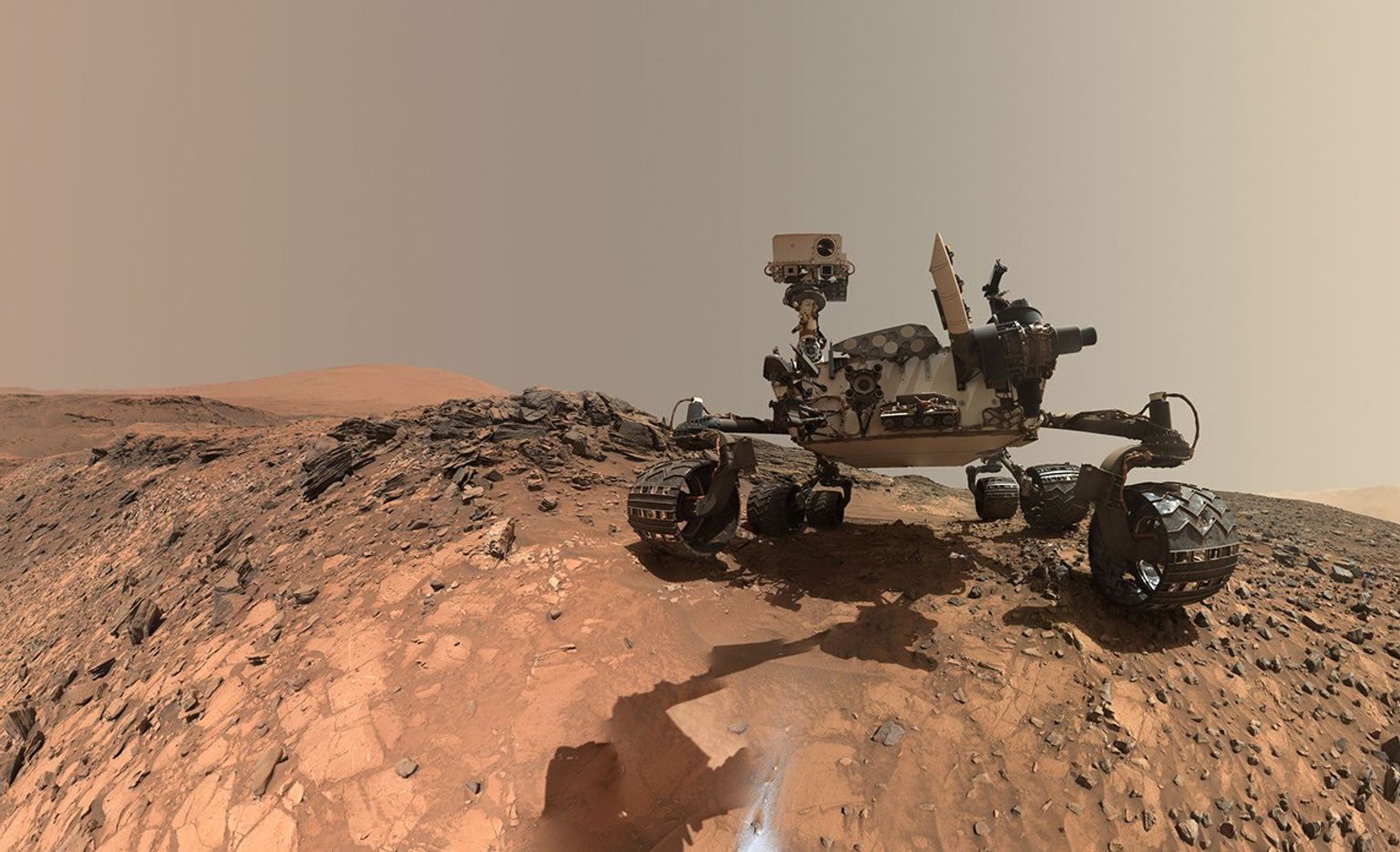
There was excitement in the air as the Curiosity Science Team kicked off a drill campaign at the Atacama site to characterize the first Mount Sharp layered-sulfate bedrock since leaving the boxwork terrain.
Monday was a three-sol plan (4873-4875) where we focused on “drill sol 1” activities that included a pre-load test on our drill target as well as triage contact science. APXS assembled a set of repeated observations on the Atacama drill target, and the coordinated MAHLI images taken with different lighting will provide an opportunity to detect possible changes between the datasets. Mastcam assembled stereo mosaics to document the Atacama drill site, investigate variations in the bedrock at “Kimsa Chata,” and characterize the layering within Paniri butte.
Planning resumed Friday with another three-sol plan (4876-4878) that included the full drill and portion characterization related to “drill sols 2 and 3” activities. Mastcam planned stereo mosaics of rocks in the workspace including a laminated rock with an exposed edge named “Queen of the Andes,” a rock with polygonal fractures that was broken when the rover drove over it named “Curaco,” and more coverage of the “El Almendrillo” target.
Rounding out the plans this week, the Environmental theme group continues to monitor dust in the atmosphere, study cloud movements, and document the presence of dust devils. The rover will also autonomously select two targets to be analyzed by the ChemCam instrument.
Next week we look forward to continuing our drill campaign, where the next step will be delivering a portion of the Atacama target to the ChemMin instrument for analysis. The science team is looking forward to seeing how the mineralogy of the layered sulfate unit here compares to our last drill of the same unit at the Mineral King site, which is nearly 160 meters (525 feet) below our current location!



Leave a Reply